Most of us learned about money the hard way, by making mistakes as adults. Nobody sat with us when we were child and explained saving, spending, or why things cost what they cost. We just figured it out, often painfully.
Our kids do not have to learn that way. The truth is that money habits start forming far earlier than most parents imagine, long before a child begins to earn a single rupee.
The good news is that you do not need to be a finance expert to teach them. You just need a few simple ideas, taught in everyday moments, repeated as they grow. Start early, keep it simple, and let it stick.
“You are your child’s first money teacher, whether you mean to be or not.”
Here is how to raise a money-smart child, step by step and age by age.
Start With the Basics, Early
Young children can grasp money far sooner than we expect. Even a small child can understand that things cost money, that money is limited, and that choices have to be made.
You do not need formal lessons. Use real moments, like shopping or paying a bill, to gently explain what is happening. Keep it light, simple, and tied to things they can see and touch.
“Children learn money the way they learn language: through everyday exposure.”
Simple ideas for little ones:
- Money is earned — explain that money comes from work, not from thin air.
- Things have prices — point out costs while shopping so money feels real.
- You must choose — show that buying one thing means not buying another.
Use Pocket Money as a Teaching Tool
A small, regular allowance is one of the most powerful teaching tools you have. It gives a child their own money to manage, and the freedom to make small mistakes while the loss is small.
The key is to let them actually decide. If you control every rupee, they learn nothing. Let them spend, save, and sometimes regret, because regret over a small toy is a cheap and valuable lesson.
“A child who never controls money never learns to manage it.”
How to use pocket money well:
- Keep it regular — a fixed amount on a fixed day builds routine.
- Let them decide — give real freedom over how it is used.
- Allow mistakes — a wasted allowance teaches more than a lecture.
Teach the Save, Spend, Give Split
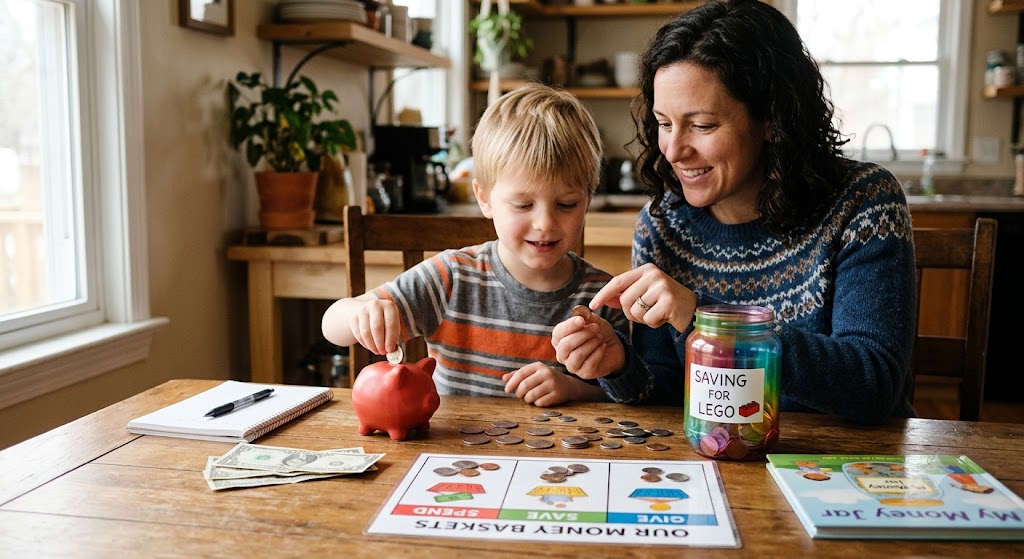
A simple and timeless lesson is to divide money into three parts: some to save, some to spend, and some to give. It is easy for a child to understand and builds balanced habits for life.
Three small jars or envelopes make this visible and fun. The child physically sees their savings grow, decides what to spend, and learns the joy of giving, all at once.
“Three jars can teach a lifetime of balance: save, spend, and give.”
The three-jar idea:
- Save — money set aside for a bigger goal, like a toy they really want.
- Spend — money for small, everyday treats they can enjoy now.
- Give — a little set aside to help others, building generosity early.
Let Them Earn and Wait
Two of the most valuable money lessons are that money is earned through tasks being done, and wait for purchasing things. Both are easy to teach at home.
Let older kids earn a little extra through small tasks beyond their normal chores. And when they want something big, encourage them to save up for it rather than getting it instantly. The wait teaches patience and makes the reward sweeter.
“What a child waits and works for, a child truly values.”
Ways to teach earning and patience:
- Reward extra effort — let bigger tasks earn a little extra money.
- Encourage saving up — help them save for a big goal instead of buying now.
- Celebrate the goal — when they finally buy it, mark the achievement.
Be the Example They Copy
Children learn far more from what you do than from what you say. If you preach saving but spend wildly, they will copy your actions, not your advice. Your habits are the loudest lesson.
So let them see you make good money choices. Talk openly, in simple terms, about budgeting, saving, and waiting before buying. Make money a normal, calm topic at home, not a secret or a source of stress.
“Your child is always watching how you handle money, even when you are not teaching.”
How to lead by example:
- Model good habits — let them see you save, compare prices, and wait before buying.
- Talk openly — discuss money calmly, without fear or secrecy.
- Admit mistakes — share your own money lessons so they learn from them too.
Grow the Lessons as They Grow
Money lessons should mature with your child. What works for a six-year-old will bore a teenager. As they grow, hand them more responsibility and more real-world knowledge.
Teenagers can learn about bank accounts, the basics of saving and interest, and even simple ideas about investing and avoiding debt. The earlier they meet these ideas, the more confident they will be as adults.
“Match the lesson to the age, and keep raising the bar.”
Lessons for older kids and teens:
- Banking basics — how a savings account works and why interest matters.
- Budgeting — planning their money for a week or a month.
- Smart borrowing — the dangers of easy debt and spending beyond means.
The Takeaway
Teaching kids about money is not about long lectures or complex finance. It is about small, steady lessons woven into daily life, repeated as they grow. Do this, and you hand them a gift that lasts a lifetime.
Here is the whole plan in one glance:
- Start early — even young kids can grasp the basics
- Use pocket money — let them manage and make small mistakes
- Save, spend, give — the three-jar habit builds balance
- Earn and wait — teach effort and patience
- Be the example — your habits teach louder than your words
- Grow the lessons — match them to your child’s age
“A child who learns money early grows into an adult who never has to learn it the hard way.”
Pick one idea from this list and try it this week, maybe the three jars or a simple shopping chat. Small lessons now build a confident, money-smart adult later.
How do you teach your kids about money? Share your tips in the comments, and pass this on to a parent who will find it useful.
Leave a Reply