Every parent knows the mealtime struggle. You cook something healthy, your child pushes it away, and after a fight, you give them biscuits or fast food so that they eat something. It happens in almost every home.
The worry underneath is real. The eating habits kids form now tend to follow them into adulthood. A child who learns to love vegetables and home food grows into a healthier adult, and one who lives on junk often does not.
The good news is that healthy eating habits can be built gently, without daily battles or force. It is less about strict rules and more about smart, patient habits repeated over time. Here is how to do it calmly.
“You cannot force a child to eat well. But you can make eating well feel normal.”
Let us look at practical ways to raise a healthy eater.
1. Make Healthy Food the Default
Children eat what is easily available. If chips and sweets are within reach, they will choose them. If fruits and healthy snacks are the easy option, they will reach for those instead.
So shape the home so the healthy choice is the easy choice. Keep fruit on the counter, cut veggies in the fridge, and junk out of sight or out of the house. You control the options; let them choose from the good ones.
“You cannot control every bite. But you can control what is within reach.”
How to set the default:
- Stock the good stuff — fruit, nuts, and healthy snacks kept visible.
- Hide the junk — keep sweets and chips out of sight and reach.
- Offer good choices — let kids pick between two healthy options.
2. Don’t Force, Keep Offering
Forcing a child to eat something almost always backfires. It turns food into a fight and makes them dislike it when you want them to enjoy. Pressure is the enemy of healthy eating.
Instead, keep calmly offering new and healthy foods without pressure. Kids often need to see a food many times before they try it. Patience, not force, is what wins in the long run.
“A food refused today may be a favourite next month. Keep offering, calmly.”
How to offer without pressure:
- No force — never make eating a battle or a punishment.
- Keep trying — offer new foods repeatedly, without a fuss.
- Small portions — a little on the plate are less overwhelming.
3. Involve Kids in Food
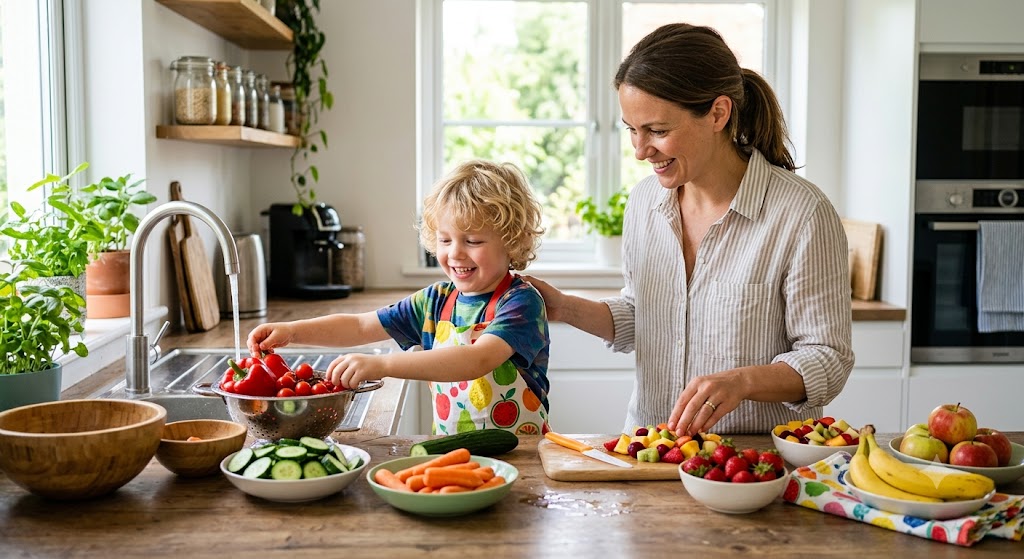
Children are far more likely to eat food they helped make. When kids take part in shopping, washing, or simple cooking, they feel a sense of ownership and curiosity about what ends up on their plate.
Let them help in age-appropriate ways, picking vegetables at the market, stirring a bowl, or setting the table. The involvement makes healthy food feel like theirs, not something forced on them.
“A child who helps make the meal is far more likely to eat it.”
Ways to involve them:
- Shop together — let them pick a fruit or vegetable to try.
- Cook together — simple, safe tasks like washing or stirring.
- Grow something — even a small herb pot builds curiosity.
4. Eat Together as a Family
Family meals are one of the most powerful tools for healthy eating. When kids eat with the family, they see healthy eating modelled, try new foods more willingly, and build a positive bond with mealtime.
Make shared meals a habit whenever you can. Sit together, eat the same food, and keep the mood pleasant. Children copy what they see, so let them see the whole family eating well.
“Children learn to eat well by watching the people they love eat well.”
Why family meals matter:
- Model good eating — kids copy what parents put on their plates.
- Same food for all — avoid cooking separate “kid food.”
- Keep it pleasant — calm, happy meals build good associations.
5. Lead by Example
You cannot ask a child to eat vegetables while you skip them yourself. Kids notice everything. Your own eating habits teach far more than any rule you set at the table.
Show them what healthy eating looks like by doing it yourself, happily. Eat your greens, enjoy your fruit, and speak positively about good food. Your example is the strongest lesson.
“Your plate teaches your child more than your words ever will.”
How to model well:
- Eat what you preach — enjoy healthy food in front of them.
- Speak positively — never call healthy food boring or a chore.
- Avoid diet talk — keep the focus on health, not weight or restriction.
6. Make Healthy Food Fun and Appealing
Presentation matters more than we think, especially for young children. The same healthy food can feel exciting or boring depending on how it looks. A little creativity goes a long way.
Cut fruit into fun shapes, arrange colours nicely, or give dishes playful names. When healthy food looks appealing and fun, kids are far more willing to give it a try.
“Make healthy food look like a treat, and it becomes one.”
How to make it appealing:
- Add colour — a plate with many colours is more inviting.
- Fun shapes — cut fruit and veggies into playful forms.
- Let them dip — a healthy dip makes veggies more fun to eat.
The Takeaway
Raising a healthy eater is not about strict rules, force, or winning every mealtime standoff. It is about calm, steady habits that make good food normal, available, and enjoyable, repeated with patience.
Here is the whole plan at a glance:
- Make healthy food the default — easy to reach, junk out of sight
- Do not force — keep offering calmly, without pressure
- Involve them — kids eat what they help make
- Eat together — family meals model good habits
- Lead by example — your plate teaches the loudest
- Make it fun — colour, shapes, and creativity win kids over
“A child who learns to enjoy healthy food is given a habit that protects them for life.”
Pick one idea and try it this week, maybe cooking together or keeping fruit within reach. Small, patient steps build a healthy eater over time.
How do you encourage healthy eating at home? Share your tips in the comments, and pass this on to a parent battling a fussy eater.
Leave a Reply