You lie down for rest, but your mind will not switch off. You scroll your phone, toss and turn, glance at the clock, and watch the hours slip away. Morning comes far too soon, and you drag yourself through the day, tired again.
Poor sleep has quietly become normal for many of us. We treat it as bad luck or something we cannot control. But most sleep problems are not random, they come from small daily habits that damage our rest.
The fix has a name: sleep hygiene. It is simply the set of habits and conditions that help you sleep well. Improve these, and better rest often follows, no pills or special tricks required. Here are practical steps to sleep better starting tonight.
“Good sleep is not luck. It is the result of good habits.”
Let us walk through the steps to better and deeper rest.
1. Keep a Consistent Sleep Schedule
Your body runs on an internal clock, and it loves routine. Going to bed and waking up at different times each day confuses this clock and makes good sleep a bit harder.
The single most powerful step is to sleep and wake at roughly the same times every day, even on weekends. A steady rhythm trains your body to feel sleepy and alert at the right times.
“Your body craves a rhythm. Give it one, and sleep gets easier.”
How to build the routine:
- Fixed times — sleep and wake at the same hours daily.
- Weekends too — keep it steady, avoid big shifts.
- Be patient — it takes a few weeks for the rhythm to settle.
2. Create a Pre-Sleep Routine
You cannot go from full speed straight to sleep. Your mind and body need time to shift gears. A pre-sleep routine signals that the day is ending and it is time to rest.
Spend the last part of your evening on silent, relaxing activities. This buffer between a busy day and bed makes falling asleep far easier and more natural.
“You cannot slam the brakes on a busy mind. Ease it down instead.”
Wind-down ideas:
- Dim the lights — lower lighting signals your body to relax.
- Do something calm — reading, gentle stretching, or soft music.
- Keep it screen-light — avoid stimulating activities before bed.
3. Cut Screens Before Bed
Screens are one of the biggest enemies of good sleep. The bright light from phones, tablets, and TVs can trick your brain into thinking it is still daytime, making it harder to feel sleepy.
Beyond the light, scrolling keeps your mind active and engaged when it should be winding down. Putting screens away before bed is one of the most effective sleep upgrades you can make.
“The glow of a screen tells your brain the sun is still up.”
How to manage screens:
- Set a cut-off — put screens away a while before bed.
- Keep phones out — charge them outside the bedroom if you can.
- Swap the scroll — read a book instead of your feed.
4. Watch What You Eat and Drink
What you consume, especially in the evening, has a big effect on your sleep. Caffeine, heavy meals and alcohol close to bedtime can all disrupt your rest, often without you realising it.
Being mindful about evening food and drink helps your body settle for sleep instead of working hard to digest or fighting stimulation late into the night.
“What you drink in the evening can decide how you sleep at night.”
What to watch:
- Limit caffeine — avoid tea, coffee, and alcohol late in the day.
- Go light at night — avoid heavy meals close to bedtime.
- Be careful with alcohol — it disrupts sleep quality even if it makes you drowsy.
5. Make Your Bedroom Sleep-Friendly
Your sleep environment matters more than you think. A room that is too bright, noisy, hot, or cluttered works against rest. A few simple changes can turn your bedroom into a proper sleep sanctuary.
The goal is a space that is dark, quiet, cool, and comfortable, one that invites sleep rather than fights it. Small tweaks here often bring surprisingly big improvements.
“A good bedroom does half the work of a good night’s sleep.”
How to optimise your room:
- Keep it dark — block light with curtains or an eye mask.
- Keep it cool and quiet — a comfortable temperature and low noise.
- Reserve the bed — use it for sleep, not work or scrolling.
6. Manage Daytime Habits Too
Good sleep starts long before bedtime. What you do during the day, your activity, sunlight, and naps, all shape how well you sleep at night. Sleep hygiene is a whole-day practice.
Getting daylight, staying active, and being careful with long daytime naps all help your body build a healthy sleep drive by night. The day and the night are deeply connected.
“How you spend your day quietly decides how you sleep at night.”
Daytime habits that help:
- Get daylight — natural light helps set your body clock.
- Stay active — regular movement supports deeper sleep.
- Nap wisely — keep naps short and not too late in the day.
7. Don’t Force It
Basically, trying too hard to sleep often keeps you awake. Lying in bed frustrated, watching the clock, only builds anxiety that pushes sleep further away. Sometimes the best move is to stop trying.
If sleep will not come, get up, do something calm in low light, and return to bed when you feel sleepy. Removing the pressure helps sleep arrive on its own.
“Chasing sleep scares it away. Relax, and it comes to you.”
What to do when sleep won’t come:
- Get up — leave bed if you are wide awake and frustrated.
- Stay calm — do something quiet and low-light, no screens.
- Return when sleepy — go back to bed once drowsiness returns.
The Takeaway
Better sleep is rarely about one magic fix. It is about a set of simple habits, kept consistently, that work together to help you fall asleep faster and rest more deeply, night after night.
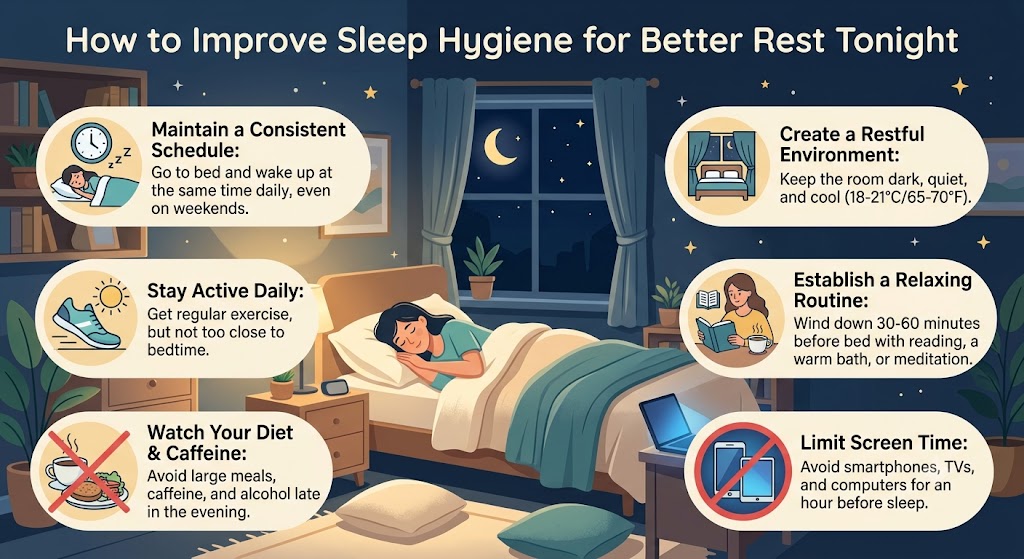
Here is the whole plan in one glance:
- Keep a schedule — sleep and wake at steady times
- Wind down — a calm routine before bed
- Cut screens — put them away before sleep
- Watch food and drink — mind caffeine, heavy meals, alcohol
- Optimise your room — dark, cool, quiet, comfortable
- Manage your day — light, activity, and smart naps
- Do not force it — relax instead of chasing sleep
“Treat sleep as a habit to nurture, not a switch to flip, and rest will follow.”
Pick one or two steps and try them tonight, maybe a screen cut-off or a fixed bedtime. Small, steady changes are how better sleep is built.
Which sleep habit will you start with? Share it in the comments, and pass this on to someone who could use better rest.
Leave a Reply