Every parent today faces the same battle. The screen is the easiest babysitter ever invented. It buys you a few minutes of peace to cook, work, or simply breathe. And it works every time.
But that peace comes with a nagging worry. Too much screen time can affect a young child’s sleep, attention, mood, and play. We all feel it, yet the screen is so convenient that will buy time for us to do other work.
The good news is that managing screen time is not about banning screens completely, which is unrealistic today. It is about setting sensible limits and building healthy habits, calmly and consistently. Here is how to do it without daily meltdowns.
“The goal is not zero screens. It is screens that serve your child, not the other way around.”
Let us walk through practical ways to keep screen time healthy.
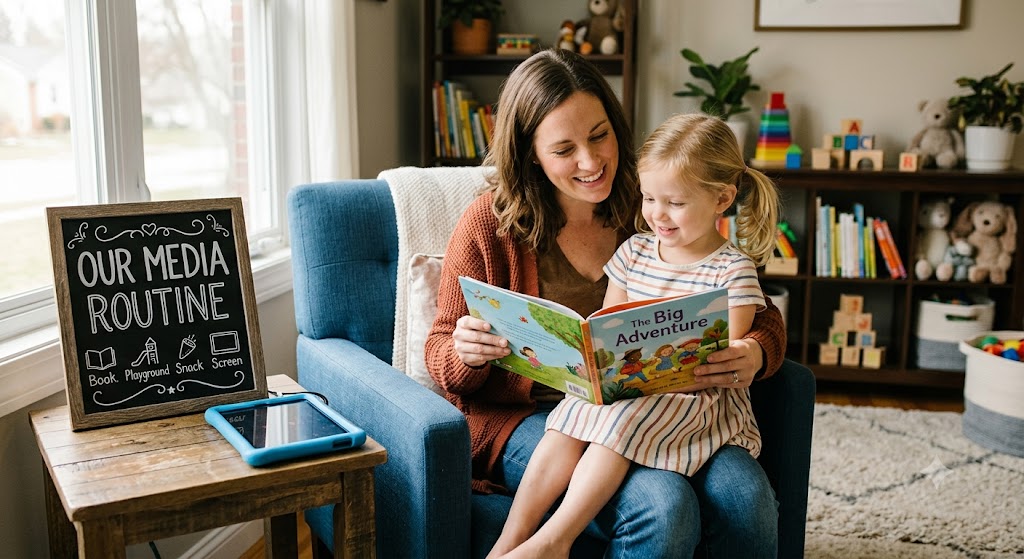
1. Set Clear Limits and Stick to Them
Children thrive on clear rules, even when they protest them. Vague limits like “not too much” cause endless negotiation. Clear, firm limits actually make life easier for everyone.
Decide on daily screen limits that fit your child’s age, and hold the line. When kids know exactly what to expect, the arguing shrinks over time. Consistency is what makes any rule work.
“A clear limit, calmly kept, ends more fights than any lecture.”
How to set limits that stick:
- Be specific — a set number of minutes, not a vague “a little.”
- Match the age — younger children need tighter limits.
- Stay consistent — the same rule every day builds acceptance.
2. Choose Quality Over Quantity
Not all screen time is equal. An hour of a gentle, educational show is very different from an hour of loud, fast, mindless clips. What your child watches matters as much as how long.
Pick content that is calm, age-appropriate, and ideally teaches or sparks imagination. Avoid overstimulating, ad-heavy, or violent material. Better content makes the same screen time far healthier.
“It is not just how long they watch. It is what they watch.”
How to raise the quality:
- Pick calm content — gentle, slow shows over frantic, flashy ones.
- Choose learning — programs that teach words, numbers, or ideas.
- Preview it — check what they watch before handing over the screen.
3. Keep Screens Out of Key Moments
Where and when screens appear matters a lot. Screens at the dinner table, in the bedroom, or right before sleep harm connection, appetite, and rest. Setting a few screen-free time is better.
Make meals, bedrooms, and the hour before sleep screen-free by default. These small boundaries preserve family time, better sleep, and healthier habits without needing a total ban.
“Some moments are too precious to share with a screen.”
Screen-free zones worth keeping:
- Mealtimes — no screens at the table, to engage in talk.
- Bedrooms — keep devices out to guard sleep.
- Before bed — no screens in the hour before sleep for better rest.
4. Offer Better Alternatives
A child reaches for a screen most when they are get bored. The answer is not just to take the screen away, but to give them something more appealing to do.
Fill the home with easy, fun offline options, and screens lose some of their pull. When play, books, and outdoor time are within reach, kids naturally choose them more often.
“You beat the screen not by banning it, but by offering something better.”
Good alternatives to keep ready:
- Free play — toys, blocks, and pretend games that spark imagination.
- Outdoor time — parks, walks, and physical play every day.
- Creative activities — drawing, crafts, or simple books within reach.
5. Watch and Talk Together
Screens do not have to isolate your child. When you watch with them and talk about what you see, screen time can become a shared, connecting activity instead of a solo escape.
Sit with them sometimes, ask questions about the show, and link it to the real world. This turns passive watching into active learning, and keeps you aware of what they are consuming.
“A screen watched together teaches more than a screen watched alone.”
How to make it shared:
- Co-view — watch along and enjoy it with them.
- Ask questions — “why did he do that?” turns watching into thinking.
- Connect to real life — link what they saw to the world around them.
6. Change to Healthy Screen Habits Yourself
This is the hardest one, because it is about us. Children copy our screen habits closely. If we are glued to our phones while telling them to put theirs down, the message fails.
Show them what healthy screen use looks like. Put your own phone away during family time, and let them see you choose real life over the screen. Your example is the most powerful rule of all.
“Your child learns screen habits by watching yours.”
How to lead by example:
- Put your phone away — during meals and family time.
- Have screen-free time — moments where the whole family unplugs.
- Be present — show that people matter more than devices.
The Takeaway
Managing screen time is not about winning a war against technology. It is about keeping screens in their place, so they add to your child’s life without crowding out sleep, play, and connection.
Here is the whole plan in one glance:
- Set clear limits — specific, age-matched, and consistent
- Choose quality — calm, educational content over mindless clips
- Keep screen-free zones — meals, bedrooms, and before bed
- Offer alternatives — play, outdoors, and creativity
- Watch together — turn screen time into shared time
- Model good habits — your example matters most
“The goal is a child who can enjoy a screen and then happily walk away from it.”
Pick one change to try this week, maybe screen-free meals or watching along with your child. Small, calm steps build healthy screen habits that last.
How do you manage screen time at home? Share your approach in the comments, and pass this on to a parent facing the same daily struggle.
Leave a Reply