We live in a world that celebrates speaking. We admire the confident talker, the smooth presenter, the person who always has something clever to say. We take courses to speak better and dream of being more articulate.
But almost nobody works on the other skill, the one that actually builds trust, wins respect, and deepens every relationship. That skill is listening, and it is far rarer and more powerful than we realise.
Most of us do not really listen. We wait for our turn to talk, half-hearing while we plan our reply. Real listening, the kind that makes people feel truly heard, is uncommon and unforgettable. Here is why it beats speaking every time.
“Everyone wants to be heard. The person who truly listens becomes unforgettable.”
Let us explore why listening holds so much more power than we give it credit for.
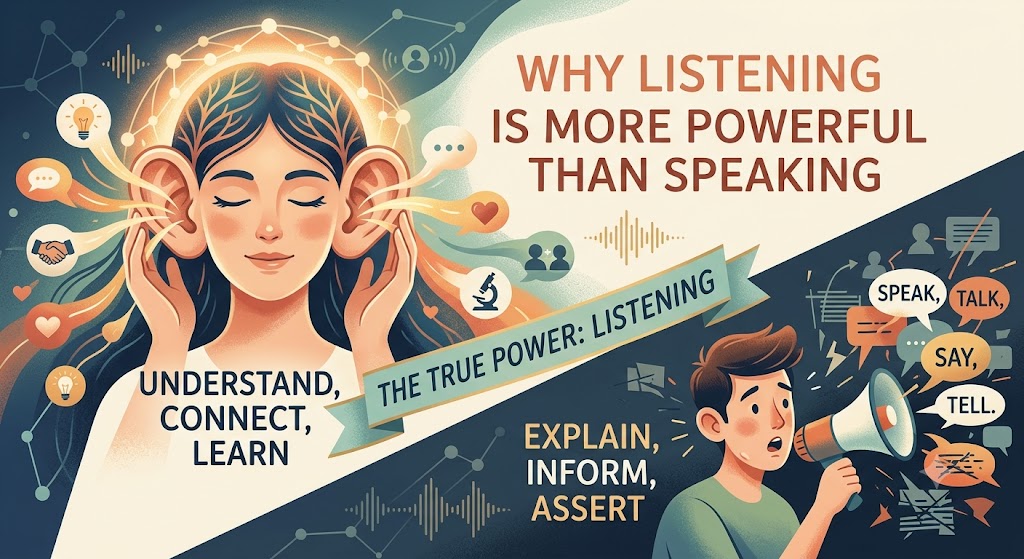
1. People Like Being Heard
At the deepest level, every person wants to feel understood. Not advised, not corrected, not talked over, just heard. It is one of the strongest human needs and one of the least met.
When you truly listen to someone, you give them your full attention. That simple act makes people feel valued in a way that clever words never can.
“To be heard is to feel valued. Give that gift, and people never forget you.”
Why listening matters so much:
- It meets a real need — everyone longs to feel understood.
- It shows respect — attention is a form of care.
- It is rare — few people actually do it, so it stands out.
2. Listening Builds Trust Fast
Trust is the foundation of every strong relationship, and nothing builds it faster than genuine listening. When people feel you truly hear them, they open up, relax, and trust you more.
A good talker can impress, but a good listener earns something deeper. People confide in those who listen, and confiding creates a bond that talking alone can never build.
“You do not win trust by talking. You win it by listening.”
How listening creates trust:
- It lowers guards — people relax when they feel heard.
- It invites openness — good listeners are trusted with more.
- It deepens bonds — connection grows from feeling understood.
3. You Learn More by Listening
There is an old saying that we have two ears and one mouth for a reason. When you speak, you only repeat what you already know. When you listen, you learn something new.
Every conversation is a chance to understand another person, gain a fresh perspective, or spot something you missed. The best learners, leaders, and thinkers are almost always great listeners.
“When you talk, you learn nothing. When you listen, you learn everything.”
Why listening teaches you:
- New perspectives — you see through someone else’s eyes.
- Hidden information — people reveal more when truly heard.
- Better decisions — more understanding leads to wiser choices.
4. Listening Makes You More Influential
Here is the paradox: the best way to influence people is often to listen, not to argue. When people feel understood, they lower their defences and become far more open to what you have to say.
Push and lecture, and people resist. Listen first, understand their view, and they will listen to yours in return. Real influence begins with hearing the other side.
“People do not open their minds to those who talk at them, but to those who listen to them.”
How listening persuades:
- It lowers resistance — people defend less when they feel heard.
- It earns a hearing — listen first, and they listen back.
- It reveals what matters — you learn what truly moves them.
5. Most People Listen Poorly
The reason great listening is so powerful is that it is so rare. Most people do not listen; they wait to talk. They interrupt, judge, or drift off, thinking about their own reply.
Simply avoiding these common habits already sets you apart. You do not need special talent to be a great listener, just the discipline to be fully present and silent.
“You do not need to be brilliant to stand out. You just need to actually listen.”
Common listening mistakes:
- Waiting to talk — planning your reply instead of hearing.
- Interrupting — cutting in before they finish.
- Judging early — deciding your response before understanding.
6. How to Become a Better Listener
The good news is that listening is a skill anyone can build with practice. It starts with a simple shift: making the goal of understanding the other person, not responding.
Give people your full attention, put away distractions, and let them finish. Ask questions that show you are following. Small habits, practised daily, turn you into the kind of listener people seek out.
“Listen to understand, not to reply. That one shift changes everything.”
How to listen well:
- Be fully present — put the phone away and focus.
- Let them finish — do not interrupt or rush them.
- Ask, do not lecture — questions show you are truly listening.
- Reflect back — a summary shows you understood.
The Takeaway
In a noisy world full of people trying to be heard, the quiet skill of listening is a superpower. It builds trust, deepens relationships, teaches you more, and gives you real influence, all without saying much at all.
Here is the whole idea in one glance:
- People crave being heard — listening meets a deep need
- It builds trust fast — faster than any words
- You learn more — listening teaches, talking does not
- It persuades — understanding opens minds
- It is rare — most people listen poorly, so it stands out
- It is learnable — presence and patience are all it takes
“The most powerful thing you can do in a conversation is often to say nothing and truly listen.”
In your next conversation, try one thing: listen fully without planning your reply. Notice how differently the other person responds when they feel truly heard.
Are you a talker or a listener? Share your thoughts in the comments, and pass this on to someone who could use a reminder to listen more.
Leave a Reply