Look around your home right now. Most chances are you own far more than you use, and much of it is draining your time, money, and attention. Clutter has a way of piling up things that are not required without us ever noticing.
Minimalism offers a way to come out of clutter, but it is misunderstood as a poor life. Most people picture empty white rooms, no furniture, and a life of extreme sacrifice. That image scares them off before they even begin.
The truth is much gentler. Minimalism is not about owning as little as possible. It is about owning only what adds value to your life and letting go of the rest. It is about more room, not more emptiness. Here is how to start.
“Minimalism is not about having less for its own sake. It is about making space for what matters.”
Let us look at simple, beginner-friendly ways to start living with less.
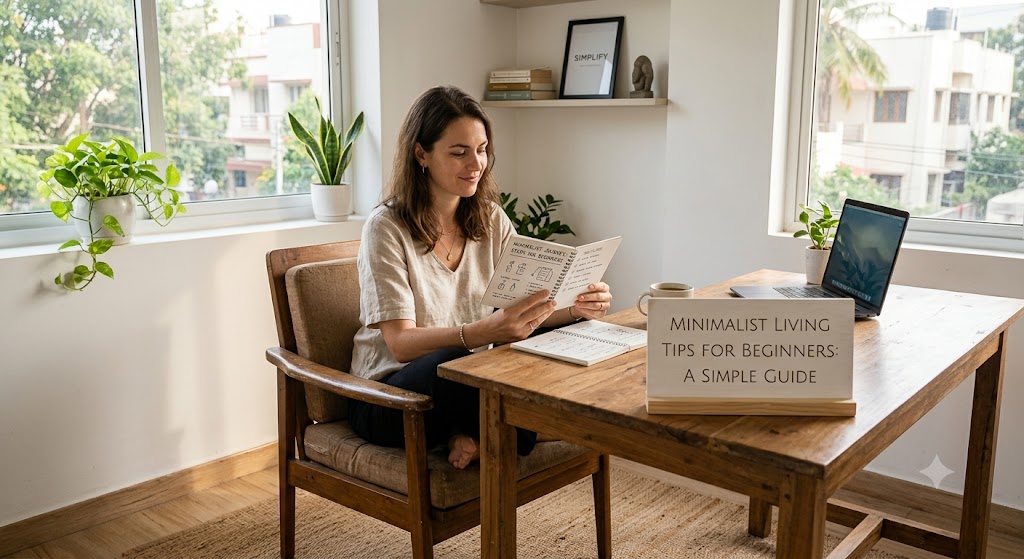
1. Understand What Minimalism Really Is
Before you throw anything away, get the idea right. Minimalism is not a competition to own the fewest things. It is a mindset of being intentional about what you keep and why.
The goal is a life with less clutter, less stress, and more focus on what truly matters to you. It looks different for everyone.
“Minimalism is not a rule about numbers. It is a question: does this add to my life?”
What minimalism really means:
- Intentional, not empty — keeping what matters, not owning anything.
- Personal — your version is unique to your life.
- About freedom — less stuff means less to manage and worry about.
2. Start Small, Not Everywhere
The biggest mistake beginners make is trying to declutter their entire home in one weekend. It is overwhelming and exhausting, and they usually give up halfway through, feeling like a failure.
Start with one small, easy area instead, a single drawer, a shelf, or your wallet. A quick win builds momentum and confidence. Small victories make the next step feel possible.
“You do not declutter a house in a day. You declutter one drawer at a time.”
How to start small:
- Pick one spot — a drawer, a shelf, or one corner.
- Finish it fully — complete one area before moving on.
- Build momentum — let each small win push you forward.
3. Keep Only What Adds Value
The heart of minimalism is a simple question you ask about each item: Does this add real value to my life? If it does, keep it. If it does not, it is just taking up space.
Be honest as you go through your things. Many items we keep out of guilt, habit, or “just in case” add nothing but clutter. Letting them go feels lighter than you expect.
“If it does not add value, it is only taking up space.”
How to decide what stays:
- Ask the question — does this add value or joy to my life?
- Watch for “just in case” — most such items are never used.
- Let go of guilt — keeping unused gifts helps no one.
4. Try the One-In, One-Out Rule
Decluttering is only half the battle. If you keep buying, the clutter creeps right back. A simple rule keeps your space in balance long after the first big clear-out.
The rule is easy: for every new item you bring in, let one go. This forces you to think before buying and stops your belongings from multiplying again.
“The clutter you clear today comes back tomorrow, unless you guard the door.”
How the rule works:
- One in, one out — a new shirt means an old one leaves.
- Think before buying — it makes every purchase deliberate.
- Stay in balance — your total belongings stop growing.
5. Be Mindful About Buying
Minimalism is as much about what you do not buy as what you throw away. Most clutter starts at the checkout. Buying more mindfully stops the problem at its source.
Before any purchase, pause and ask if you truly need it or just want it in the moment. This simple habit saves money, reduces clutter, and cuts the constant chase for more.
“The easiest thing to declutter is the thing you never bought.”
How to buy mindfully:
- Pause before buying — wait a day on non-essentials.
- Need vs want — be honest about which it is.
- Quality over quantity — fewer, better things last longer.
6. Declutter Your Digital Life Too
Minimalism is not only about physical stuff. Your phone, inbox, and digital life can be just as cluttered and just as draining. A clean digital space calms the mind too.
Clear out unused apps, unsubscribe from noisy emails, and organise your files. Reducing digital clutter cuts distraction and stress, leaving you calmer and more focused each day.
“A cluttered phone clutters the mind as much as a messy room.”
How to declutter digitally:
- Delete unused apps — clear what you never open.
- Unsubscribe — cut the flood of emails you ignore.
- Tidy your files — organise photos and documents simply.
The Takeaway
Minimalism is not about deprivation or empty rooms. It is about clearing away the excess so you have more time, money, space, and peace for the things and people that truly matter to you.
Here is the whole plan at a glance:
- Get the idea right — intentional living, not owning nothing
- Start small — one drawer beats the whole house
- Keep what adds value — let the rest go
- One in, one out — stop clutter from creeping back
- Buy mindfully — the best declutter is not buying
- Go digital too — clear your phone and inbox
“You do not need more space or more storage. You need less stuff and more intention.”
Pick one small area today, a drawer, your phone, or your wallet, and clear it out. That first small win is often all it takes to begin.
Where will you start your minimalist journey? Share it in the comments, and pass this on to someone drowning in clutter.
Leave a Reply