We are told endlessly to look after our bodies. Eat well, exercise, sleep enough, get a check-up. And rightly so, health is wealth, as the saying goes.
But there is a kind of health that almost nobody talks about, even though it shapes our daily lives just as much. It decides how well we sleep, how calm we feel, and how free our choices are.
That is financial health. And ignoring it is just as risky as ignoring your body. The good news is that both finance and health work in similar ways.
“You can be physically fit and financially sick. Real wellness needs both.”
Let us look at why your money deserves the same care as your body.
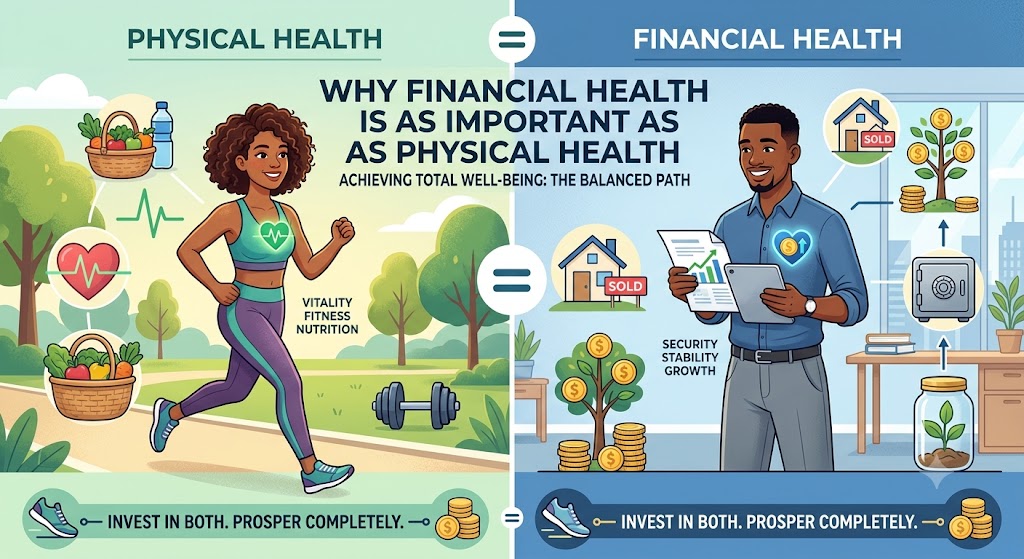
1. The Striking Similarities
Once you notice it, the parallels between physical and financial health are everywhere. Both are built slowly, ruined quickly, and shaped far more by daily habits than by occasional big efforts.
Crash diets fail, and so do get-rich-quick schemes. Consistency wins in both. A little done daily beats a lot done rarely, whether it is steps walked or rupees saved.
“Both your body and your bank balance are built by what you do every day, not once a year.”
How the two mirror each other:
- Built on habits — small daily actions matter more than rare big ones.
- Quick to damage — one reckless stretch can undo years of progress in either.
- Prevention beats cure — guarding against trouble is far easier than fixing it.
2. Poor Financial Health Hurts Your Body Too
This is the part people miss: money stress is not just a number problem. It is a health problem. Financial worry is one of the most common sources of chronic stress, and chronic stress ruins the body health.
Sleepless nights over bills, anxiety about debt, and the constant pressure of living paycheck to paycheck all take a real physical toll. Your money troubles can literally make you ill.
“An empty bank account does not just stress your mind. It strains your body.”
How money stress harms health:
- Poor sleep — worry about bills and debt keeps you up at night.
- Chronic stress — constant money pressure raises anxiety and wears you down.
- Neglected health — tight finances make people skip check-ups and treatment.
3. Both Need Regular Check-Ups
You would not skip a health check for years and assume everything is fine. Yet most people never review their finances at all. They avoid looking, hoping the problem stays away.
A financial check-up is simple and powerful. Once in a while, look honestly at what you earn, spend, owe, and save. Catching a problem early, in money as in health, makes it far easier to fix.
“Avoiding the scale does not make you fitter. Avoiding your accounts does not make you richer.”
What a financial check-up covers:
- Income vs spending — are you living within your means each month?
- Debt levels — is what you owe shrinking or growing?
- Savings and safety — do you have an emergency fund and a growing nest egg?
4. Build Financial Fitness Like Physical Fitness
The best part is that getting financially fit uses the same playbook as getting physically fit. You do not need to be perfect or extreme. You need small, repeatable habits that compound over time.
Just as you might start with a short daily walk, you can start with a small monthly saving. Both feel tiny at first and powerful after years.
“You do not get fit in a day, and you do not get rich in one. You get both by showing up.”
Habits that build financial fitness:
- Save regularly — a fixed amount every month, like a daily walk for your money.
- Avoid junk — cut wasteful spending the way you would cut junk food.
- Invest for growth — let money grow over time, the way exercise builds strength.
5. Don’t Wait for a Crisis
Many people only fix their health after a scare, and only fix their money after a crisis. By then, the damage is harder and costlier to undo. The smart move is to act while things are fine.
Starting today, even in a small way, is the single best decision for both kinds of health. The earlier you begin, the gentler the journey and the bigger the payoff.
“The best time to get healthy, in body or in money, was years ago. The second best is now.”
Why starting now matters:
- Damage compounds — ignored problems, in health or money, grow over time.
- Early is easier — small fixes now beat painful repairs later.
- Calm decisions win — acting before a crisis beats reacting during one.
The Takeaway
We pour effort into our bodies and ignore our money, then wonder why we still feel anxious and stuck. True wellbeing rests on both legs. A fit body with broken finances is only half-healthy.
Here is the whole idea in one glance:
- Both are habit-built — daily actions matter more than rare big efforts
- Money stress harms the body — financial worry wrecks sleep and health
- Both need check-ups — review your finances like a health screening
- Build fitness slowly — small, steady money habits compound like exercise
- Do not wait for a crisis — start caring for both today
“Look after your body so you can enjoy life, and your money so you can afford to.”
This week, give your finances a five-minute check-up, just like a health screening. Look at one number honestly, and take one small step to improve it.
How healthy are your finances right now? Share your check-up below, and pass this on to someone who guards their body but ignores their money.
Leave a Reply