You did not plan to buy it. You saw it, felt a little spark of “I want this,” and moments later, it was yours. The joy lasted about an hour. The regret and the dent in your bank balance lasted much longer.
We have all done it. Impulse spending is one of the biggest silent drains on our money, and it is powerful because it is emotional, not logical. You are not buying a thing; you are buying a feeling.
The good news is that impulse spending can be beaten, with an understanding of why it happens and a few simple tricks that stop it in its tracks. Here is how to take back control of your spending.
“Impulse buying is not a money problem. It is an emotion problem with a price tag.”
Let us look at why we do it, and how to stop.
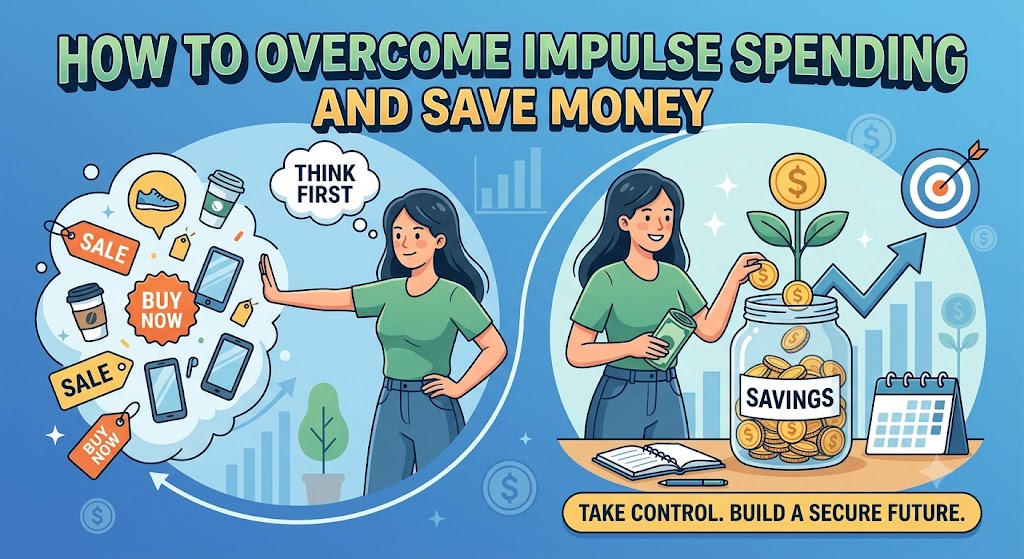
1. Understand Why You Do It
You cannot beat an enemy you do not understand. Impulse spending is rarely about the item itself. It is about the emotion underneath, stress, sadness, or the quick thrill of buying something new.
Once you see this, everything changes. When you are urged to buy anything, pause and ask what you are really feeling. Often, the real need is comfort or excitement, not the thing in the cart.
“Most impulse buys are attempts to fix a feeling with a purchase.”
Common triggers to notice:
- Emotions — buying to feel better when stressed, sad, or bored.
- The thrill — the quick dopamine hit of something new.
- Social pressure — buying because others have it.
2. Add a Waiting Period
This is the single most powerful trick against impulse spending, and it is beautifully simple. The urge to buy is strong but short-lived. If you can delay the purchase, the urge usually fades on its own.
Give yourself a rule: wait a set time before any non-essential purchase. For small items, wait a day. For bigger ones, wait a week or more. Most impulse urges do not survive the wait.
“An impulse rarely survives a good night’s sleep.”
How to use the waiting rule:
- The 24-hour rule — wait a day on small non-essentials.
- The 30-day rule — wait a month on bigger wants.
- Sleep on it — if you still want it later, then decide.
3. Remove the Temptations
Much of impulse spending is triggered by constant exposure, sale emails, shopping apps, and saved cards that make buying frictionless.
So make buying harder and temptation rarer. Unsubscribe from marketing emails, delete shopping apps, and remove your saved card details. When buying takes effort, impulses fade before they turn into purchases.
“The easiest way to resist temptation is to never see it.”
How to cut temptation:
- Unsubscribe — from sales and marketing emails.
- Delete shopping apps — remove the one-tap buying.
- Unsave your cards — make checkout a deliberate effort.
4. Use Cash or a Spending Limit
Digital payments make spending painless, and painless spending is dangerous. The more you feel the money leaving, the more careful you become. This is why cash and limits work so well.
Try using cash for discretionary spending, or set a fixed “fun money” limit each month. When you can see the money running out, you naturally spend more thoughtfully.
“The more real the money feels, the more carefully you spend it.”
How to make spending real:
- Use cash — for eating out, shopping, and treats.
- Set a fun budget — a fixed monthly limit for wants.
- Track it — watch the limit so you feel it shrinking.
5. Ask the Right Questions Before Buying
A few simple questions, asked at the moment of temptation, can break the spell of an impulse buy. They pull you out of the emotional rush and back into clear thinking.
Before buying, pause and ask yourself: do I need this, or just want it? Will I still care about it next month? Would I buy it if it were not on sale? Honest answers stop most impulse buys.
“One good question at the checkout can save a month of regret.”
Questions to ask yourself:
- Need or want? — be honest about which it is.
- Will it matter later? — imagine next month, not just now.
- Only because it’s cheap? — a discount is not a reason to buy.
6. Make a List and Stick to It
Impulse spending thrives on unplanned shopping. When you shop without a plan, everything looks tempting. A simple list keeps you focused and shields you from the extras.
Before you shop, whether for groceries or online, make a list of what you actually need. Then buy only what is on it. The list becomes your armour against the tempting extras.
“A shopping list is a promise you make to yourself before temptation appears.”
How to shop with a list:
- Plan first — write down what you need before shopping.
- Stick to it — buy only what is on the list.
- Avoid browsing — do not wander through shops or apps for fun.
7. Find Cheaper Ways to Feel Good
Since impulse spending is often about chasing a feeling, the lasting fix is to find other, cheaper ways to get that same lift. Remove the emotional need, and the urge to spend weakens.
When you feel the urge, reach for something that also feels good but costs little, a walk, a call to a friend, a hobby, or exercise. Over time, these become your new go-to comforts.
“Beat impulse spending by finding free ways to feel the way it promises.”
Healthier feel-good swaps:
- Move your body — a walk or workout lifts your mood for free.
- Connect — call a friend instead of filling a cart.
- Do a hobby — channel the urge into something you enjoy.
The Takeaway
Stopping impulse spending is not about depriving yourself or having superhuman willpower. It is about understanding the emotional pull behind it and using simple tricks that give your logical mind time to catch up.
Here is the whole plan at a glance:
- Understand why — impulse buys chase feelings, not things
- Add a waiting period — urges fade if you delay
- Remove temptation — unsubscribe, delete apps, unsave cards
- Make money real — use cash or a spending limit
- Ask the right questions — need or want, now or forever
- Shop with a list — and stick to it
- Find cheaper comforts — meet the feeling another way
“The goal is not to never enjoy spending, but to spend on purpose instead of on impulse.”
Pick one tactic and use it on your very next urge to buy, maybe the 24-hour wait. Beating impulse spending starts with winning one small moment at a time.
What triggers your impulse spending? Share it in the comments, and pass this on to someone trying to spend more mindfully.
Leave a Reply