Becoming a parent changes everything. Your time, your sleep, your energy, and your attention all shift toward this small person who needs you completely. And for many parents, somewhere in that shift, they quietly disappear.
We are taught that good parents sacrifice everything for their children. So we skip meals, lose sleep, drop our hobbies, and ignore our own needs. Until, one day, we have nothing left to give.
Here is the truth that changes everything: taking care of yourself is not selfish; it is essential. A depleted, burnt-out parent cannot pour from an empty cup. Caring for yourself is how you keep caring for them. Here is how to balance the two.
“You cannot pour from an empty cup. Caring for yourself is caring for your child.”
Let us look at how to make room for self-care without the guilt.
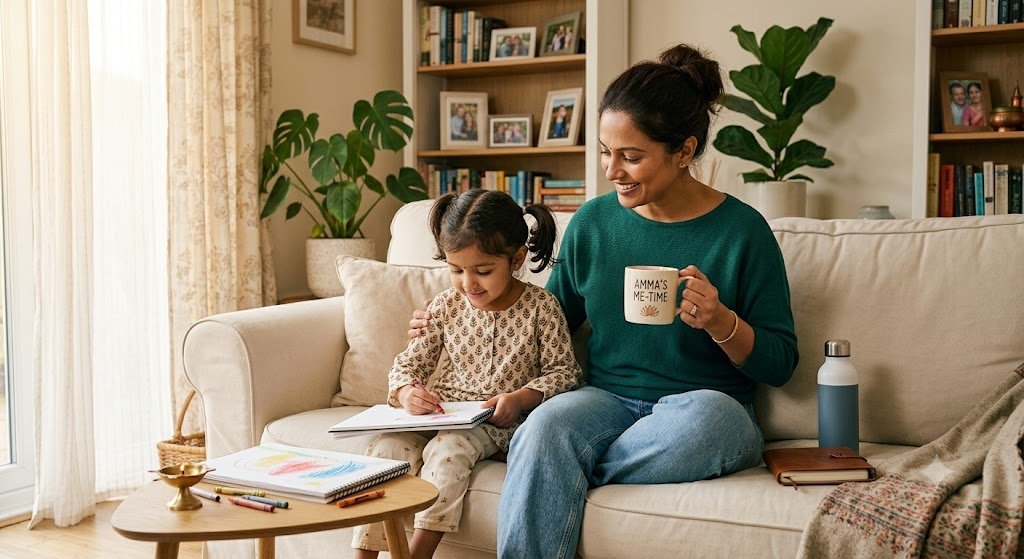
1. Let Go of the Guilt
The biggest barrier to parental self-care is not time; it is guilt. We feel that any moment spent on ourselves is a moment stolen from our children. So we deny ourselves even small breaks.
But this thinking is backwards. Taking time to recharge makes you a more patient, present, and loving parent. Self-care is not taking away from your family; it is investing in your ability to show up for them.
“Time for yourself is not stolen from your child. It is given back to them, refreshed.”
How to release the guilt:
- Reframe it — self-care makes you a better parent, not a worse one.
- Model it — kids learn to value their own wellbeing from you.
- Accept the need — you are a person too, not just a parent.
2. Start With the Basics
Self-care does not have to mean spa days or long holidays. For exhausted parents, it starts with the simple, non-negotiable basics that keep any human functioning: sleep, food, and a little movement.
These foundations are often the first things parents sacrifice, and the most important to protect. Getting even a little better at the basics can transform how you feel and cope each day.
“Before anything fancy, protect the basics: rest, food, and movement.”
The essentials to protect:
- Sleep — rest whenever you can; it fuels your patience.
- Nourishment — eat properly, not just your kids’ leftovers.
- Movement — even a short walk lifts your body and mind.
3. Find Small Pockets of Time
Many parents feel they have zero time for themselves, and long stretches may indeed be rare. But self-care does not require hours. It can happen in small, stolen pockets scattered through the day.
Ten silent minutes with a cup of tea, a few pages of a book, or a short walk can recharge you more than you expect. Look for these small windows and claim them for yourself.
“You may not find an hour, but you can always find ten minutes. Take them.”
Where to find small moments:
- Early or late — a quiet moment before the house wakes or after it sleeps.
- During naps — rest or recharge, not just chores.
- Micro-breaks — small pauses to breathe and reset through the day.
4. Ask for and Accept Help
Trying to do everything alone is the fastest route to burnout. Yet many parents resist asking for help, seeing it as weakness or failure. In reality, accepting help is a sign of strength and wisdom.
Lean on your partner, family, and friends. Share the load, swap childcare, and let others step in so you can breathe. You are not meant to raise a child entirely on your own.
“Asking for help does not make you a lesser parent. It makes you a sustainable one.”
How to share the load:
- Split with your partner — divide parenting and chores fairly.
- Lean on your circle — family and friends can give you breaks.
- Accept offers — say yes when people offer to help.
5. Keep a Piece of Yourself Alive
Before you were a parent, you were a person with interests, passions, and an identity. Losing all of that in parenthood leads to resentment and burnout. Keeping a small piece of “you” alive is vital.
Hold on to at least one hobby, interest, or activity that is just yours. It reminds you that you are more than a caregiver, and it gives you something that refills your own tank.
“You are a parent, but you are also still you. Do not let that person disappear.”
How to stay yourself:
- Keep a hobby — protect one activity that is just for you.
- Nurture friendships — stay connected to your own relationships.
- Hold your identity — remember who you are beyond parenting.
6. Care for Your Mental Health
Parenting is emotionally demanding, and it is normal to feel overwhelmed, anxious, or low at times. Your mental health matters just as much as your physical health, and it deserves real attention.
Talk about your feelings, lean on your support network, and do not hesitate to seek professional help if you are struggling. Looking after your mind is one of the most important things you can do, for yourself and your family.
“Your mental health is not a luxury. It is the foundation of your parenting.”
How to protect your mind:
- Talk it out — share your feelings instead of bottling them.
- Stay connected — do not isolate yourself in the hard times.
- Seek help — reach out to a professional if you are struggling.
The Takeaway
Balancing parenting and self-care is not about choosing between your children and yourself. It is about realising that caring for yourself is what enables you to care well for them. A healthy parent raises a happier family.
Here is the whole plan in one glance:
- Drop the guilt — self-care makes you a better parent
- Protect the basics — sleep, food, and movement
- Find small pockets — ten minutes count
- Accept help — you are not meant to do it alone
- Stay yourself — keep a hobby and an identity
- Mind your mental health — it is the foundation of it all
“Take care of yourself, not instead of your children, but for them.”
Choose one small act of self-care today, a walk, a rest, or ten quiet minutes, and take it without guilt. A refreshed you is the best gift you can give your family.
How do you make time for self-care as a parent? Share your tips in the comments, and pass this on to a parent who needs permission to rest.
Leave a Reply